Still Here, Not Watching: The Fans Who Outgrew the Show But Never Left the Tribe
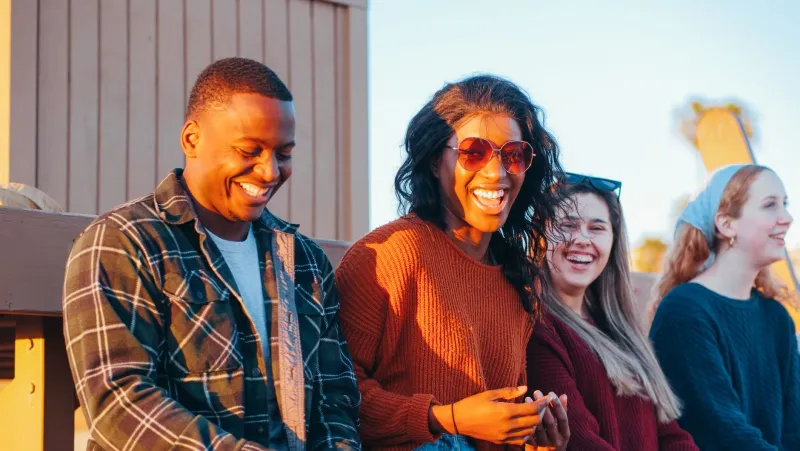
Ask Danielle from Columbus, Ohio when she last actually watched The 100 and she'll laugh before she even answers. "Honestly? Probably 2019," she says. "Maybe early 2020 if you count the rewatch I did for like three episodes before I gave up again." But scroll through her phone and you'll find a group chat with seventeen people she met in a fan forum, a shared Google calendar full of virtual hangouts, and a running inside joke that would take forty-five minutes to explain to an outsider.
She hasn't left the fandom. Not even close.
Danielle isn't an outlier. Across every corner of entertainment fandom — TV shows, book series, video games, anime — there's a quietly massive population of people who've emotionally moved on from the source material but remain stubbornly, joyfully rooted in the communities that grew up around it. They don't rewatch. They don't replay. They might not even remember half the plot anymore. But they're still here, still showing up, still invested in something that looks a lot more like friendship than fandom.
So what's actually going on?
The Show Was Always Just the Entrance
This is the part that the entertainment industry tends to miss: for a meaningful chunk of fans, the content itself is less of a destination and more of a recruiting event. A show pulls you in. A game gives you something to obsess over. A book series hands you a shared language. But what keeps people around — sometimes for years after the finale, after the last DLC, after the author stops writing — is the web of relationships that formed while everyone was busy talking about the thing they all loved.
Psychologists call this kind of group cohesion "parasocial scaffolding" — the idea that shared media experiences create the initial structure for real social bonds to form. The content gives people a reason to gather. The community gives them a reason to stay.
Once you understand that framing, it makes total sense that someone would stop caring about the show but never stop caring about the people. The scaffold did its job. What got built on top of it belongs to the people who built it.
What the Community Offers That the Show Never Could
Here's the thing about entertainment: it's fundamentally one-directional. You consume it. It doesn't know you exist. You can love a character, root for a storyline, feel devastated by a finale — but the show doesn't love you back.
A community does.
When Marcus from Atlanta says he stopped playing Destiny 2 two years ago but still logs into his clan's Discord every week, he's not talking about the game. He's talking about the people who helped him through a rough patch at work, who sent him memes when his dad was in the hospital, who flew out to see him when he got married last spring. "The game was the reason we met," he says. "But it's not the reason we're still friends."
This is what fan communities, at their best, actually provide: consistent belonging, low-stakes social interaction, a place where you're already known. In a country where loneliness has become something close to a public health crisis, those aren't small things. They're enormous. And no streaming service, no matter how good its algorithm is, can deliver them.
The Unofficial Graduation
There's a specific moment a lot of long-term community members describe — a kind of quiet internal shift where they realize the community has become primary and the content has become secondary. Nobody announces it. There's no ceremony. You just notice one day that you're more excited about the group's annual virtual watch party than you are about actually rewatching the show. That the Discord notification from your fandom friends hits differently than the one telling you a new season dropped.
Call it the unofficial graduation. You've moved past the curriculum, but you're still on campus — because campus is where your people are.
What's interesting is how little friction this transition tends to create. Most communities absorb it naturally. Nobody's checking your watch history at the door. Veteran members who've drifted from the source material often become some of the most valued contributors — they've been around long enough to hold institutional memory, to welcome newcomers, to model what healthy community participation looks like. The fandom needs them, even if the show doesn't need their viewership anymore.
When the Content Ends and the Community Doesn't
This dynamic becomes especially visible when a piece of media officially concludes. Show gets canceled. Series wraps up. Game servers shut down. For casual fans, that's usually the end of the relationship. But for the people who crossed over from "fan of the thing" to "member of the tribe," a finale is just... a Tuesday.
Fan communities for ended properties are some of the most tight-knit groups on the internet. Firefly fans have been holding the community together for over twenty years. Vine nostalgia groups on Reddit still pull tens of thousands of members. Communities built around games that haven't been actively played in a decade still run Discord servers, organize meetups, and produce fan content at a pace that would embarrass some active fandoms.
The content stopped. The community decided not to.
What This Means for How We Think About Belonging
There's a tendency — especially in media coverage and marketing — to treat fandom as a function of content consumption. More viewers equals more fans. Better content equals stronger community. But the people who've stayed in their tribes long after they stopped consuming the source material are living proof that the relationship is more complicated than that.
Community isn't a byproduct of entertainment. For a lot of people, it's the whole point.
TribeAmest was built on exactly that idea — that the most meaningful thing entertainment can do isn't entertain you, it's connect you. The shows and games and books are just the matchmakers. What happens after the introduction is up to the people in the room.
Danielle put it simply: "If The 100 got a reboot tomorrow, I'd probably watch it. But honestly, I don't need it to. I already got the thing I was looking for."
Some people find their tribe through a fandom. And then, somewhere along the way, the tribe becomes the thing worth being a fan of.